

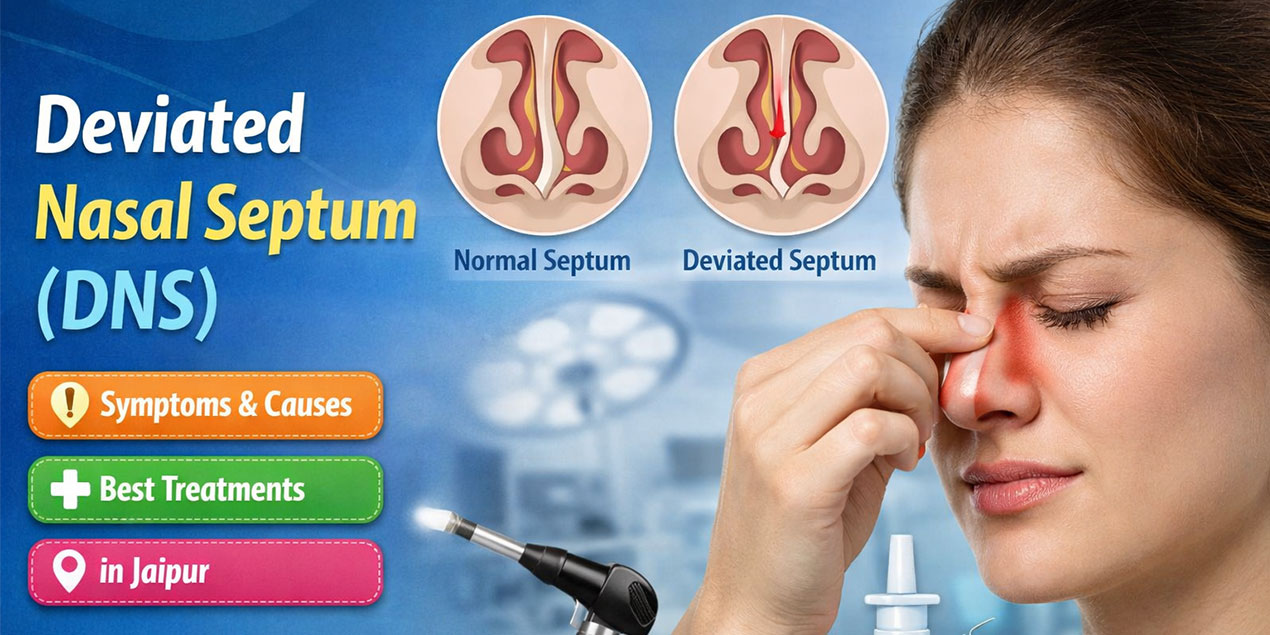
Struggling with constant nasal congestion, frequent sinus infections, or trouble breathing through your nose? You might be dealing with a deviated nasal septum (DNS), a common condition that affects millions of people worldwide. This guide is designed for anyone experiencing persistent nasal issues, those recently diagnosed with DNS, or people in Jaipur seeking effective treatment options from qualified specialists.
A deviated nasal septum occurs when the thin wall separating your nasal passages shifts to one side, blocking proper airflow and causing a range of uncomfortable symptoms. While some people are born with this condition, others develop it from injuries or natural growth patterns.
We’ll walk you through the telltale signs of DNS and help you understand what might be causing your symptoms. You’ll also discover the most effective treatment approaches available in Jaipur, from non-surgical options to advanced surgical procedures, plus practical tips for finding the right ENT specialist to address your specific needs.
Understanding Deviated Nasal Septum and Its Impact on Daily Life
What is a deviated nasal septum and how it affects breathing
A deviated nasal septum occurs when the thin wall separating your nasal passages shifts to one side, creating unequal airway spaces. This displacement blocks proper airflow, forcing you to breathe harder through one nostril while the other struggles with reduced capacity. The condition disrupts normal nasal function, leading to mouth breathing, snoring, and chronic fatigue. During sleep, the restricted airflow can cause frequent awakenings and poor oxygen intake. Many people don’t realize their breathing difficulties stem from this structural issue, often attributing symptoms to allergies or temporary congestion. The severity varies greatly – minor deviations might cause occasional stuffiness, while severe cases can completely block one nasal passage, making simple activities like exercising or sleeping extremely challenging.
Common misconceptions about DNS that prevent timely treatment
Many people wrongly assume nasal breathing problems are just seasonal allergies or temporary issues that will resolve on their own. This misconception delays proper medical evaluation for months or even years. Another common myth suggests that only severe cases need treatment, leading patients to endure chronic discomfort unnecessarily. Some believe surgery is the only solution, not knowing about effective non-surgical options available today. Parents often think children will “grow out of” breathing problems, missing critical early intervention opportunities. The belief that DNS only affects adults prevents recognition of childhood symptoms. Many assume snoring is normal and unrelated to nasal structure, overlooking a key indicator. These misconceptions create barriers to seeking appropriate care from qualified ENT specialists who can provide accurate diagnosis and treatment recommendations.
How DNS differs from other nasal conditions
| Condition | Primary Cause | Duration | Key Symptoms |
|---|---|---|---|
| DNS | Structural deviation | Permanent | One-sided obstruction, chronic stuffiness |
| Allergic Rhinitis | Environmental allergens | Seasonal/ongoing | Sneezing, runny nose, itchy eyes |
| Sinusitis | Bacterial/viral infection | Temporary | Facial pain, thick discharge, fever |
| Nasal Polyps | Chronic inflammation | Progressive | Bilateral blockage, loss of smell |
DNS presents unique challenges because it’s a physical structural problem rather than an inflammatory condition. Unlike allergies that respond to antihistamines or infections that clear with antibiotics, DNS requires different treatment approaches. The obstruction pattern in DNS typically affects one side more than the other, while allergies usually create bilateral symptoms. Chronic sinusitis often develops secondary to DNS, but the root cause remains the structural deviation. Nasal polyps can coexist with DNS but represent separate inflammatory growths that need individual attention.
The prevalence of DNS in the general population
Studies show that approximately 70-80% of people have some degree of nasal septum deviation, though many cases are mild and don’t cause noticeable symptoms. Only about 15-20% of the population experiences significant breathing problems requiring medical intervention. The condition affects men and women equally across all age groups, from newborns to elderly adults. Geographic and ethnic variations exist, with certain populations showing higher rates of severe deviations. Most people develop DNS during fetal development or early childhood growth, though trauma can cause it at any age. Sports injuries, car accidents, and even minor falls during childhood contribute to acquired deviations. Despite its high prevalence, DNS remains underdiagnosed because many people adapt to breathing difficulties over time, considering their symptoms normal rather than treatable medical conditions requiring professional evaluation.
Recognizing the Warning Signs and Symptoms of DNS
Persistent nasal congestion that doesn’t respond to medications
Chronic stuffy nose that won’t clear up despite using decongestants, antihistamines, or nasal sprays often signals DNS. The crooked septum blocks proper airflow through one or both nostrils, making breathing difficult throughout the day. People with this condition frequently switch between nostrils when trying to breathe, experience mouth breathing, and find that their congestion worsens when lying down.
Frequent sinus infections and their connection to DNS
DNS disrupts normal mucus drainage from the sinuses, creating perfect conditions for bacterial growth. When the septum blocks sinus openings, trapped mucus becomes infected, leading to recurring sinusitis episodes. Patients typically experience thick yellow or green nasal discharge, facial pressure, and repeated courses of antibiotics that only provide temporary relief before the infection returns.
Sleep disruption and snoring caused by blocked airways
Blocked nasal passages from DNS force nighttime mouth breathing, causing loud snoring and restless sleep. The restricted airflow creates vibrations in throat tissues, disturbing both the patient and their partner. Many people wake up with dry mouth, sore throat, and feel exhausted despite spending adequate time in bed. Some develop sleep apnea when the breathing obstruction becomes severe.
Headaches and facial pain linked to septum deviation
The uneven pressure distribution caused by DNS triggers tension headaches and facial discomfort. Blocked sinuses create pressure buildup that radiates across the forehead, cheeks, and around the eyes. These headaches often worsen during weather changes or when bending forward. The constant struggle to breathe through restricted passages also causes muscle tension in the neck and jaw area.
Nosebleeds and their relationship to structural abnormalities
The deviated septum creates turbulent airflow that dries out nasal tissues, making them prone to cracking and bleeding. Sharp edges or spurs on the crooked septum can irritate the delicate nasal lining, causing spontaneous nosebleeds. These episodes often occur during dry weather, after nose blowing, or first thing in the morning when nasal tissues are most dehydrated from overnight mouth breathing.
Root Causes Behind Deviated Nasal Septum Development
Congenital factors present from birth
Some people are simply born with a crooked nasal septum. During fetal development, the cartilage and bone structures that form the septum may not grow symmetrically, creating a natural deviation. This developmental variation occurs in the womb and becomes apparent as the child grows. Many individuals live their entire lives unaware of their congenital septum deviation until symptoms develop or worsen with age.
Traumatic injuries that reshape the septum
Physical trauma represents the most common acquired cause of septum deviation. Sports injuries, car accidents, falls, and direct blows to the nose can fracture or displace the delicate cartilage and bone. Even seemingly minor incidents during childhood can alter the septum’s position. The nose’s prominent location makes it particularly vulnerable to impact injuries. Previous nasal surgeries or aggressive nose picking can also contribute to structural changes over time.
Age-related changes that worsen existing deviations
Natural aging processes can gradually worsen existing septum deviations. As we age, cartilage loses elasticity and structural support, causing previously mild deviations to become more pronounced. The nasal tissues also experience changes in blood flow and cellular regeneration. Environmental factors like chronic allergies or repeated infections can accelerate these degenerative changes. What started as a minor deviation in youth may become significantly problematic in middle age or later years.
Advanced Diagnostic Methods for Accurate DNS Assessment
Physical examination techniques used by ENT specialists
ENT specialists begin DNS assessment with a thorough visual inspection of your nose, checking for asymmetry, swelling, or structural abnormalities. They use a nasal speculum to gently open your nostrils and examine the septum’s position and deviation severity. The doctor will also palpate your nose externally to identify any tenderness, structural changes, or previous trauma signs that might have contributed to the septal deviation.
Nasal endoscopy for detailed internal visualization
Nasal endoscopy provides the most comprehensive view of your nasal passages using a thin, flexible tube with a camera. This procedure allows doctors to see deep into your nasal cavity, examining the septum’s exact position, surrounding tissue inflammation, and any accompanying conditions like nasal polyps or chronic sinusitis. The high-definition images help specialists plan the most effective treatment approach while identifying complications that might affect surgical outcomes.
CT scans and imaging studies for precise measurements
CT scans offer detailed cross-sectional images of your nasal structure, providing precise measurements of septal deviation angles and thickness. These scans reveal bone and cartilage positioning that physical examination might miss, helping doctors assess the severity and plan surgical corrections accurately. Advanced imaging also identifies sinus involvement, turbinate enlargement, and other anatomical variations that could impact your breathing problems and treatment success.
Functional tests to evaluate breathing capacity
Rhinomanometry measures airflow resistance through each nostril, quantifying how much your deviated septum affects breathing function. Peak nasal inspiratory flow tests assess your maximum breathing capacity, while acoustic rhinometry measures nasal cavity volume and cross-sectional areas. These objective measurements help doctors determine whether your symptoms match the physical deviation severity and decide if surgery or conservative treatment would provide the best results for your specific condition.
Comprehensive Treatment Approaches Available in Jaipur
Non-surgical management options for mild cases
Mild deviated nasal septum cases often respond well to conservative treatments. Nasal decongestant sprays provide temporary relief from stuffiness, while saline irrigation helps clear mucus and reduce inflammation. Antihistamines control allergic reactions that worsen symptoms. Breathing strips worn during sleep improve airflow. Humidifiers maintain optimal moisture levels, preventing nasal dryness. These options work best for patients experiencing minor breathing difficulties without structural complications.
Septoplasty procedure and its success rates
Septoplasty remains the gold standard surgical treatment for severe DNS cases. The minimally invasive procedure straightens the nasal septum through small incisions inside the nose. Jaipur’s leading ENT surgeons achieve success rates exceeding 85-90% using advanced endoscopic techniques. The outpatient procedure typically takes 60-90 minutes under general anesthesia. Most patients experience significant breathing improvement within weeks. Revision rates remain low when performed by experienced specialists.
Combined treatments for complex nasal issues
Complex nasal conditions often require multiple interventions for optimal results. Septoplasty combined with turbinate reduction addresses both structural and soft tissue problems. Functional endoscopic sinus surgery (FESS) alongside septoplasty treats concurrent sinus issues. Some patients benefit from rhinoplasty combined with septoplasty for both functional and cosmetic improvements. Balloon sinuplasty may accompany septoplasty for comprehensive sinus drainage enhancement.
| Treatment Combination | Success Rate | Recovery Time |
|---|---|---|
| Septoplasty + Turbinate Reduction | 90-95% | 2-3 weeks |
| Septoplasty + FESS | 85-90% | 3-4 weeks |
| Septoplasty + Rhinoplasty | 80-85% | 4-6 weeks |
Recovery timeline and post-treatment expectations
Recovery from septoplasty follows a predictable timeline with specific milestones. Initial discomfort peaks within 48-72 hours, managed effectively with prescribed pain medications. Nasal congestion gradually improves over 1-2 weeks as swelling subsides. Most patients return to work within 5-7 days, avoiding strenuous activities for 2-3 weeks. Complete healing occurs within 6-8 weeks. Follow-up appointments monitor progress and address any concerns during recovery.
Week 1-2: Nasal packing removal, gentle saline rinses, rest
Week 3-4: Gradual activity resumption, continued nasal care
Week 5-8: Full activity clearance, final healing assessment
Choosing the Right ENT Specialist in Jaipur for DNS Treatment
Credentials and experience factors to consider
Check your potential ENT surgeon’s board certifications and specialization in nasal surgery. Look for doctors who have performed hundreds of septoplasty procedures, as experience directly impacts surgical outcomes. Verify their medical school background, fellowship training in rhinology, and membership in professional ENT associations. Ask about their specific experience with complex DNS cases and revision surgeries if needed.
Hospital facilities and technology availability
Modern DNS treatment requires advanced diagnostic equipment like nasal endoscopy systems and CT imaging capabilities. Choose hospitals equipped with state-of-the-art operating theaters, image-guided surgery systems, and proper sterilization protocols. Check if the facility offers both traditional and minimally invasive surgical options. Quality post-operative care units and 24/7 emergency support are essential for smooth recovery.
Patient reviews and success story testimonials
Read detailed patient experiences on multiple platforms including Google Reviews, Practo, and hospital websites. Focus on reviews mentioning breathing improvement, recovery time, and overall satisfaction rather than just star ratings. Contact previous patients if possible to understand their journey. Look for before-and-after cases similar to your condition and ask doctors for references from recently treated patients.
A deviated nasal septum can seriously impact your quality of life, making simple activities like breathing and sleeping a daily struggle. The good news is that with proper diagnosis and treatment, you don’t have to live with these uncomfortable symptoms forever. From recognizing the early warning signs like persistent nasal congestion and frequent headaches to understanding whether your DNS stems from injury or genetics, getting informed is your first step toward relief.
Jaipur offers excellent medical facilities and experienced ENT specialists who can provide both surgical and non-surgical treatment options tailored to your specific needs. Don’t let a deviated septum hold you back from enjoying restful sleep and easy breathing. Schedule a consultation with a qualified ENT specialist in your area to explore the treatment options that could transform your daily comfort and overall well-being.
